Summary
Finding the best car paint protection can seem complex given the many options available on the market.
In Quebec, our vehicles face daily aggressions that put bodywork under constant stress. Between PPF film (Paint Protection Film) and ceramic coating, each solution offers distinct characteristics designed to meet different needs. This guide helps you identify the best paint protection for a new car based on your situation and priorities.
Key takeaways
- PPF film offers the best protection against gravel, impacts, and Quebec winters.
- Ceramic coating enhances shine and makes maintenance easier but offers limited impact protection.
- For a new, leased, or high-end vehicle, PPF represents the safest long-term option.
Why protect your car’s paint in Quebec?
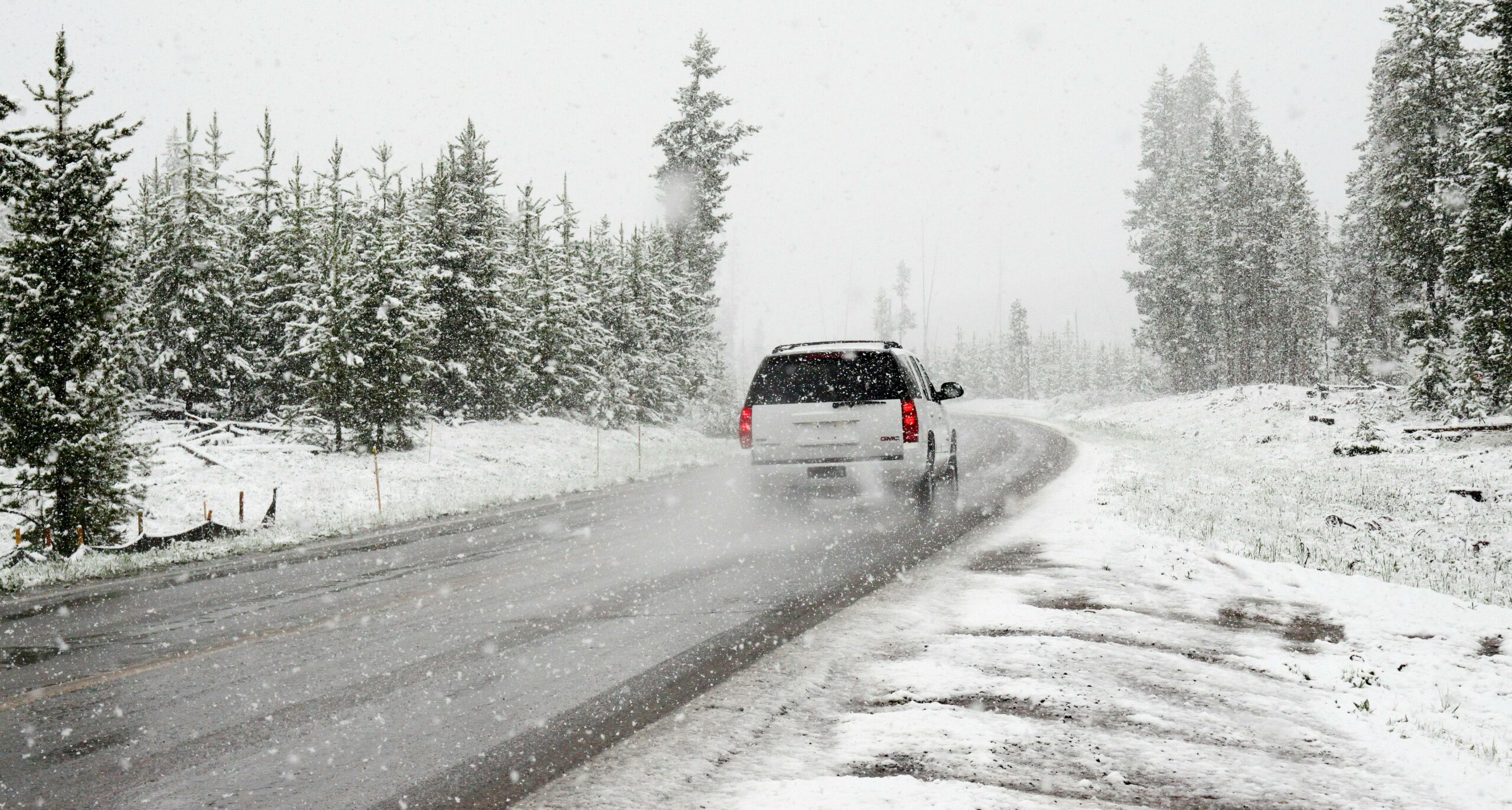
Quebec’s climate places unique demands on our vehicles. Understanding these factors helps better assess the importance of proper body protection.
De-icing salt
Quebec roads receive large amounts of salt during winter. This chemical accelerates oxidation and gradually attacks paint, creating whitish stains that are difficult to remove without proper protection.
Gravel and winter abrasives
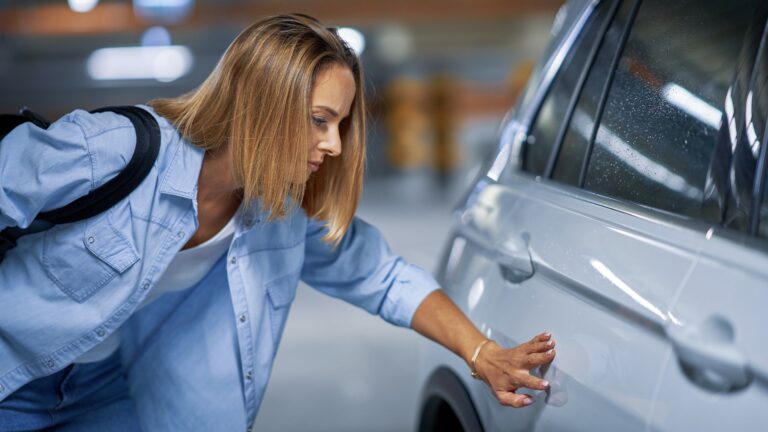
Gravel thrown up by vehicles traveling at high speed is the primary enemy of bodywork. These projectiles cause stone chips that expose metal and compromise the integrity of the original paint.
Extreme temperature variations
Freeze-thaw cycles, combined with temperature swings that can reach 50 degrees between summer and winter, weaken unprotected coatings and accelerate finish degradation.
What to know about PPF
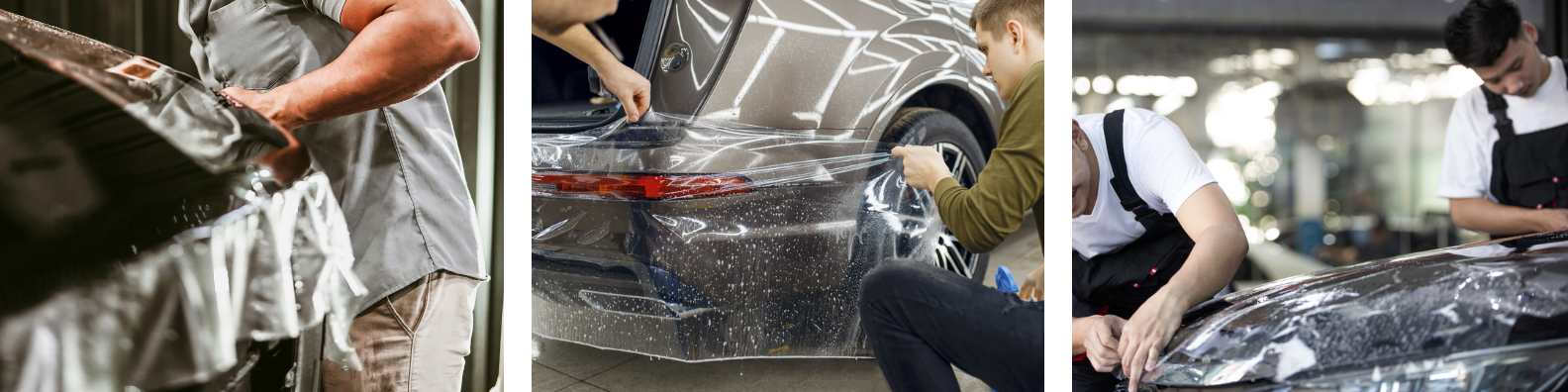
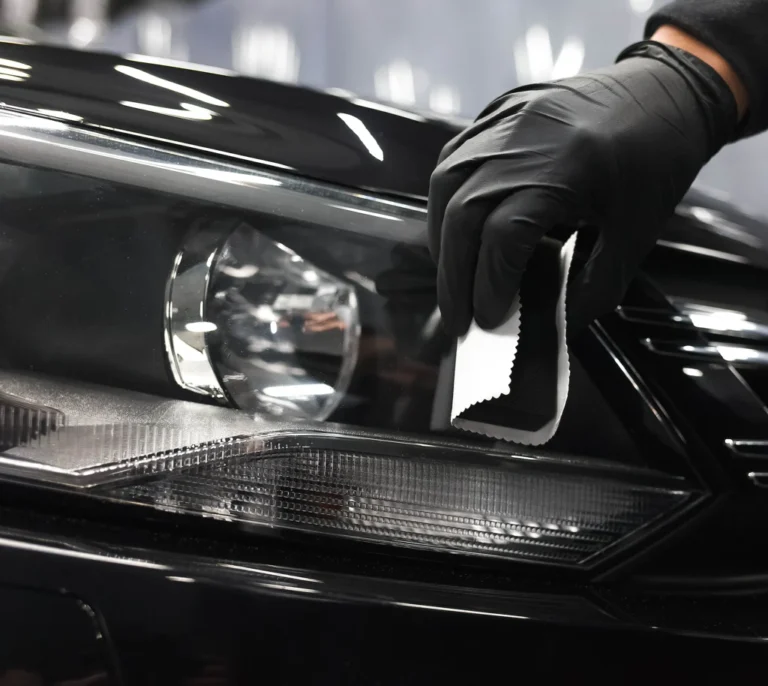
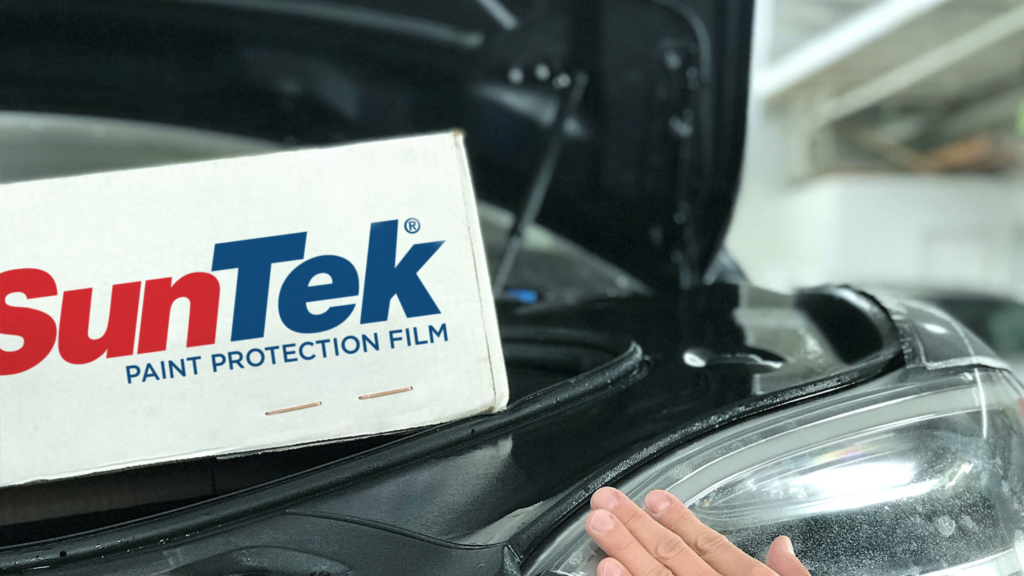
Paint protection film acts as a physical barrier applied directly to the paint. This transparent film absorbs impacts that would otherwise damage the painted surface.
Resistance to chips and slush
PPF film excels at protecting against winter projectiles. Its variable thickness, generally between 6 and 8 mils, absorbs the energy of gravel impacts and prevents chip formation. Slush loaded with abrasives slides over its surface without compromising the integrity of the paint underneath.
Self-healing
High-quality PPF films feature an outer layer capable of self-repair. Micro-scratches disappear under the effect of heat, from sunlight or warm water, restoring the original appearance without manual intervention.
Long lifespan
Professional PPF installation provides effective protection for 7 to 10 years. This exceptional durability, combined with a manufacturer warranty, makes it a cost-effective long-term investment for preserving vehicle value.
What to know about ceramic coating
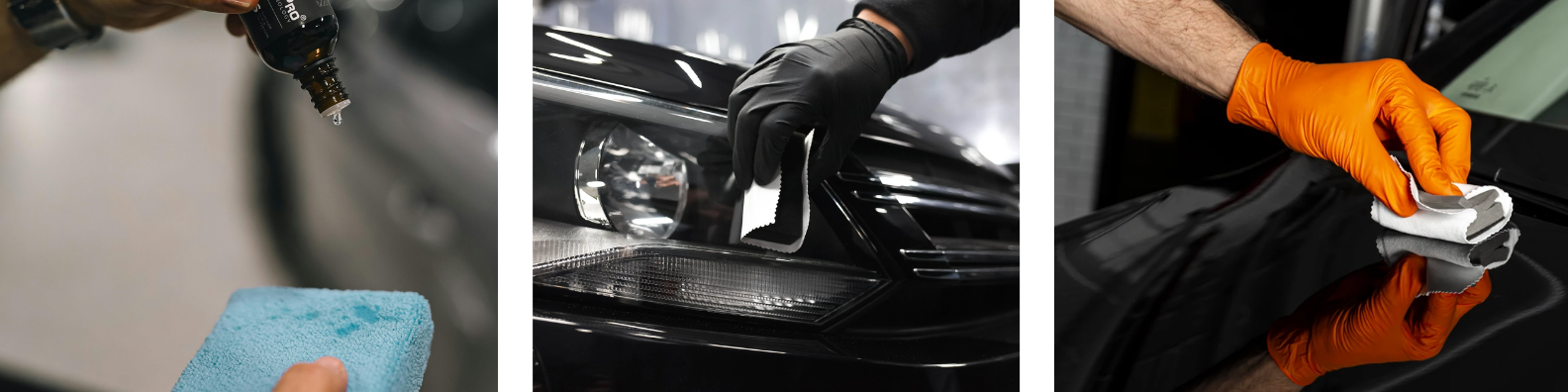
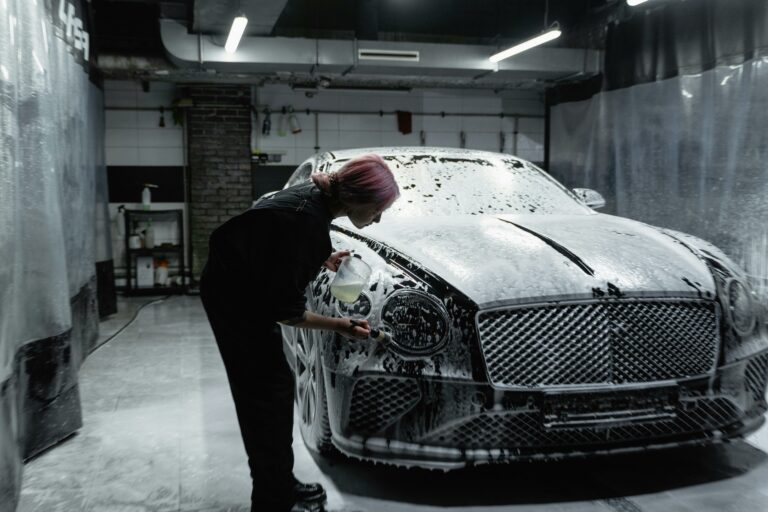
Automotive nano-ceramic treatment creates a chemical bond with the paint. This nano-ceramic layer forms a hard protective coating that alters the vehicle’s surface properties.
Shine and hydrophobic properties
Ceramic coating transforms the vehicle’s appearance by creating deep, long-lasting gloss. Its hydrophobic properties cause water to bead instantly, making maintenance easier and reducing the adhesion of contaminants such as salt or insects.
Reduced performance against gravel
Nano-ceramic excels against chemical and environmental aggressions but offers only limited resistance to solid projectiles. Gravel can penetrate this thin layer and reach the paint.
Limited impact protection
Unlike PPF film, which absorbs shocks, ceramic treatment simply hardens the existing surface. It cannot prevent chips caused by direct impacts from stones or road debris.
Quick comparison table: PPF vs ceramic
| Criteria | PPF Film | Ceramic Coating |
|---|---|---|
| Real level of protection | Excellent physical barrier against impacts and abrasion | Chemical protection and resistance to light contaminants |
| Resistance to Quebec winters | Maximum: absorbs gravel, salt, slush | Moderate: easier cleaning but vulnerable to impacts |
| Durability and longevity | 7 to 10 years with manufacturer warranty | 2 to 5 years depending on quality and maintenance |
| Daily maintenance | Minimal: regular washing is sufficient | Simple: hydrophobic effect reduces wash frequency |
| Impact on resale value | Preserves original paint intact | Improves appearance but limited protection |
| Criteria | PPF Film | Ceramic Coating |
|---|---|---|
| Real level of protection | Excellent physical barrier against impacts and abrasion | Chemical protection and resistance to light contaminants |
| Resistance to Quebec winters | Maximum: absorbs gravel, salt, slush | Moderate: easier cleaning but vulnerable to impacts |
| Durability and longevity | 7 to 10 years with manufacturer warranty | 2 to 5 years depending on quality and maintenance |
| Daily maintenance | Minimal: regular washing is sufficient | Simple: hydrophobic effect reduces wash frequency |
| Impact on resale value | Preserves original paint intact | Improves appearance but limited protection |
Which option for which driver profile?
Choosing between these technologies depends directly on your daily use and objectives, as well as the advantages and limitations of PPF based on your driving habits and the Quebec environment.
Daily driver
For mixed use with frequent highway exposure, PPF film is the logical choice. Daily commutes create countless opportunities for impacts. Outdoor parking also exposes the vehicle to weather and debris, justifying robust protection.
New or leased vehicle
Protecting a new car with PPF preserves the pristine condition of the original paint. This approach maximizes future resale value. For a leased vehicle, PPF helps avoid repair fees at return, turning this expense into a smart investment.
High-end vehicle enthusiasts and collectors
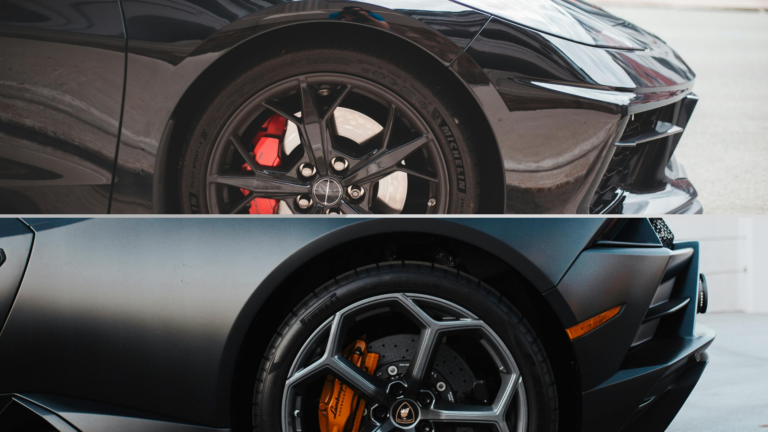
Owners of high-end vehicles seek both maximum protection and flawless aesthetics. Full PPF coverage preserves a significant investment while maintaining the original appearance. The minimal maintenance required is perfectly suited to collector vehicles.
Hybrid solution: PPF plus ceramic
The optimal combination pairs PPF on high-risk areas (front end, hood, mirrors, rocker panels) with ceramic coating over the entire vehicle. This approach combines physical protection with ease of maintenance. Ceramic treatment applied over PPF enhances gloss and hydrophobicity, creating the most complete protection available.
FAQ
Does PPF yellow over time in Quebec?
Modern, high-quality PPF films resist yellowing thanks to integrated UV inhibitors. Professional products like those used at Irenode maintain their transparency throughout their guaranteed lifespan, even under intense Quebec summer sun.
Does ceramic coating protect against scratches?
Ceramic treatment provides increased resistance to micro-scratches caused by washing or light contaminants. However, it does not prevent deep scratches or damage caused by hard objects. For this level of protection, PPF film remains essential.
Can ceramic coating be applied over PPF?
Absolutely. This combination actually represents the best protection available. Nano-ceramic applied over transparent film simplifies maintenance, increases gloss, and reinforces hydrophobic properties, creating synergy between the two technologies.
Which protection requires the least maintenance in winter?
PPF film requires the fewest interventions during Quebec winters. Its smooth surface prevents salt buildup and makes rinsing easier. Ceramic coating also requires little maintenance thanks to its water-repellent properties, but the combination of PPF plus ceramic offers maximum ease.